


Stori wyllt
Stori Wyllt is a pilot project for primary schools in Ceredigion, organised by Ceredigion Nature Partnership, which ran from March to June 2026, aiming to embed nature recovery into school life. Four primary schools were involved across Ceredigion (Ysgol Gynradd Aberteifi, Ysgol Llanarth, Ysgol Gynradd Aberaeron and Ysgol Llanilar)
Pip was selected to work in Ysgol Gynradd Aberteifi, where the focus was the biodiversity to be found in an oak tree.
The oak tree was chosen as the over arching subject as it acts as a miniature living eco system, and as such presents a huge range of opportunities for the ecologist and artist to explore and devise sessions for the pupils.
Pip facilitated 4 morning art workshops working with 23 pupils in Dosbarth Blodeuwedd – dividing the class into two groups of twelve and providing two morning sessions in the classroom with each group.
Group A – Birds of the Oak

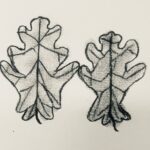

In the first session the pupils made observational drawings of oak leaves using 2B pencils, identifying the midrib tip, shape and margins of the leaf.
The students then worked with a range of different art mediums to discover different effects including:
- white charcoal pencils drawing the oak leaves on black paper
- black charcoal pencils on white paper
- graphite sticks to create rubbings of the leaves
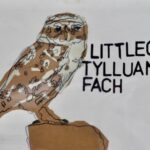
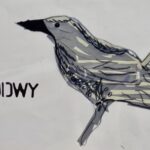
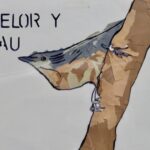
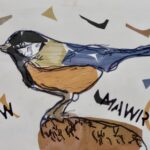
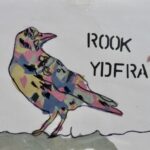
Twelve colour photographs of birds that live and forage in the Oak were selected from the RSPB website and printed out for the pupils to use as a base for creating an individual artwork. At the end of the first session the pupils drew lots to find out which bird they would be focusing on and traced the outline of the bird and details of the markings onto an acetate sheet.
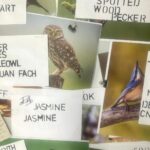

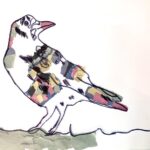
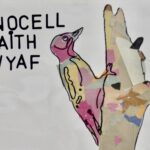
In the second session pupils developed their artworks using an overlay process, which involved collaging a copy of their drawing on a layer of paper underneath the acetate, and using stencils to create text of their bird’s name in English and Welsh.


Find out more in the stori wyllt project blog here
Group B – Butterflies & moths of the Oak
In the second group the focus was patterns in nature, particularly referencing the patterns seen on specific butterflies and moths that live in oak trees. We talked initially about why butterflies and moths have such colourful and patterned shapes.
In the first session the pupils made a pattern sheet with seven of the most common patterns and shapes found on the wings of butterflies and moths.
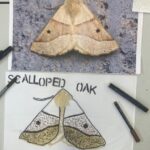
Twelve full-colour A3 photographs of moth and butterfly species associated with the oak tree had been selected. As with Group A, a lottery, identified a specific photo of a butterfly or moth for each pupil to work with.
A sheet of tracing paper was attached with a clip over the photograph and the pupils drew the outline of the butterfly or moth and added all the details like the veins and pattern shapes, using a sharp pencil first and then going over theses lines with a permanent black marker.

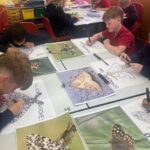
In the second session each pupil was given an A3 piece of cartridge paper, pre-prepared with a pencil grid of 48 squares to make the background .The pupils selected and added alternate patterns and colours from their original pattern sheet with colour markers. We talked about the impact of colour and half of the group worked with warm colours – reds, oranges, yellows – and the other half used cool colours – blues, greens, and purples in their background.
The pupils then chose colour markers which represented their specific species to colour in and add the detail patterns and shapes and finally adding the name of the butterfly or moth in English and Welsh to the final image, using letter stencils prior to the images being framed.

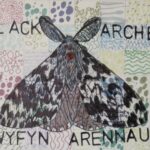


A selection of work, showcasing the work of all the schools involved, contributed to a pop-up exhibition in Studio 3 in Aberteifi.
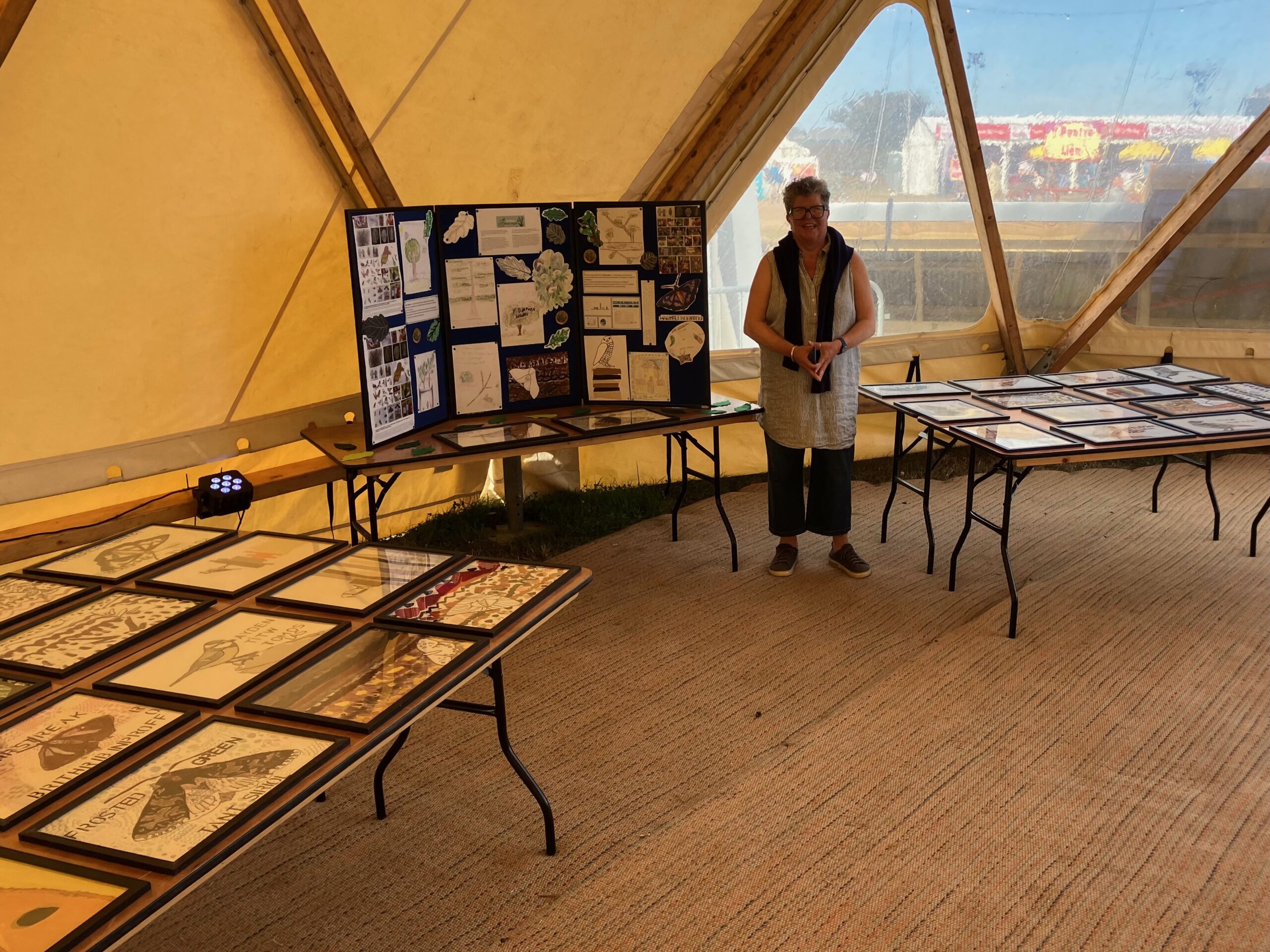
A further selection of images was showcased at a performance in the Science and Technology pavillion at the National Eisteddfod Carreg Las in Llantwd.